The open source
memory layer for
A local-first personal knowledge base and web research tool. Save web pages, highlights, notes, documents, and AI conversations. Find everything with semantic search so you never lose useful information across tabs, bookmarks, and scattered files.
$ Install Nodecast
curl -fsSL https://github.com/sarox-dev/Nodecast/releases/latest/download/install.sh | bash
Requires Docker & Git
Stop losing useful information across
tabs
bookmarks
notes
AI chats
Save something useful in ChatGPT, but weeks later it's buried. You can't search it, can't find it.
Bookmarks store links, not context. You know you saved something, but not why it mattered.
Research scatters across tabs, docs, Reddit saves, AI outputs. Nothing connects, leaving you with fragments.
You re-research the same topics because your past work is impossible to retrieve when you need it.
Personal knowledge base with semantic search. Capture once, reuse forever.
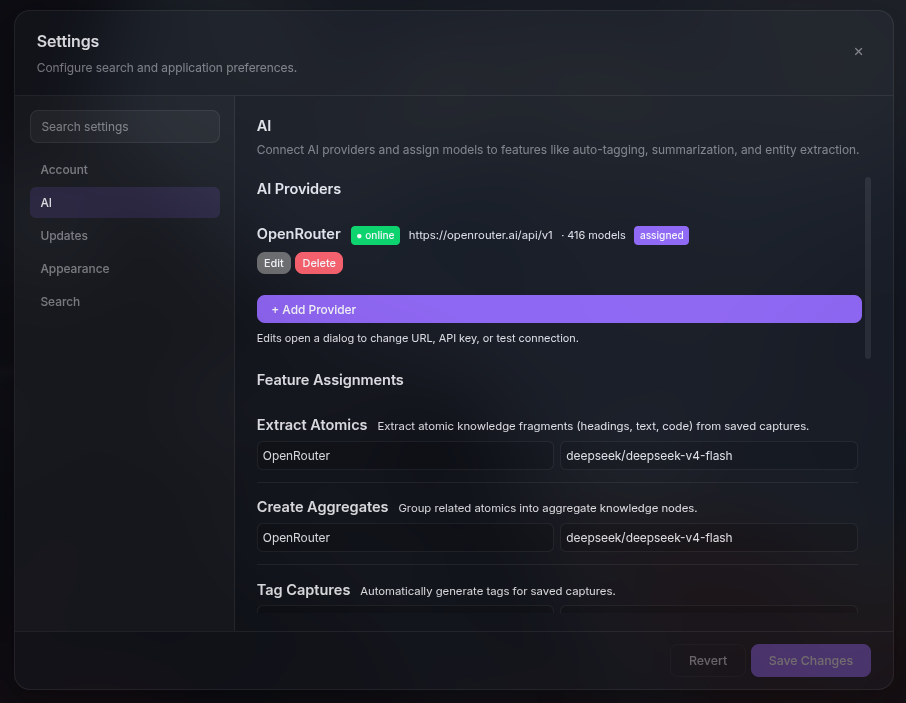
A unified memory layer that captures, organizes, and helps you retrieve what matters from any source.
Save from anywhere
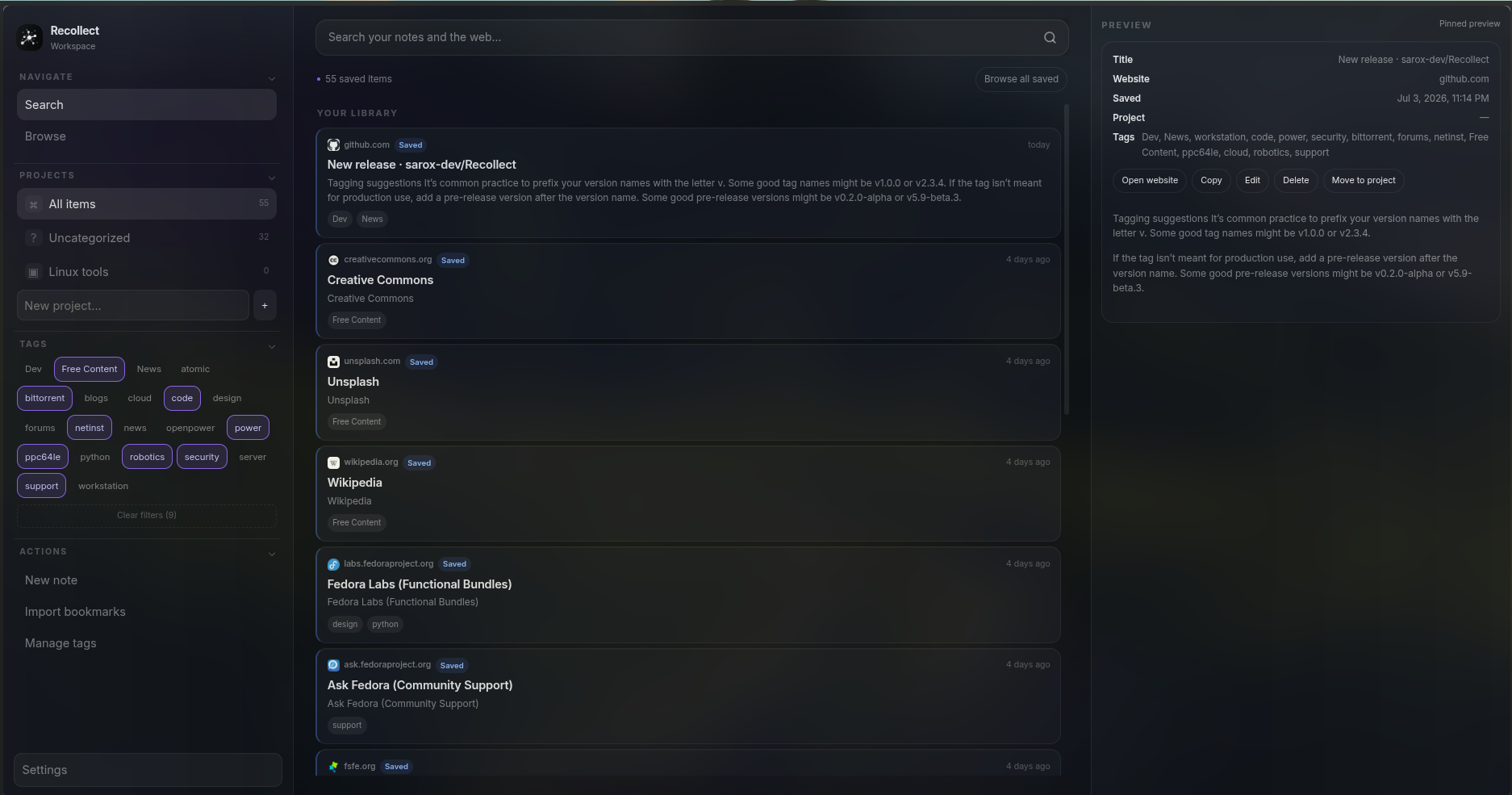
Capture web pages, highlights, notes, documents, and AI conversations from ChatGPT, Claude, and more, all into one personal knowledge base.
Auto-organize into knowledge
The extractor pipeline transforms raw content into structured Knowledge Objects. No manual tagging required. Just save, and it's organized automatically.
Semantic search across everything
Search across web pages, notes, AI chats, and documents from one place. Find what you've already learned instead of starting over.
Reuse forever
Bring back research, code snippets, prompts, and decisions precisely when you need them. Search once, reuse forever.
Not a bookmark manager.
Not a notes app. A knowledge system.
Nodecast is built for knowledge reuse, not just storage. It saves context, not just links.
Browser bookmarks
Nodecast
Traditional notes apps
Your knowledge stays yours. Private by design.
Local-first architecture. No cloud dependency. No tracking. Built for people who want real control over their data.
Local-first by design
Your data lives on your device first. Sync and backup are optional, never mandatory. You have full control over where your knowledge lives.
Privacy-first, not privacy-washing
No tracking, no selling data, no unnecessary cloud dependencies. Your knowledge stays yours, period.
You own the format
Data stored in open, standard formats including Markdown and JSON. Export anytime. Never locked into a proprietary silo. Obsidian-compatible directory structure.
Built for integration
REST API and planned MCP server for AI agent integration. Designed for developers who want to connect Nodecast to their own tools and workflows.
Frequently asked questions
Everything you need to know about Nodecast's personal knowledge base, browser extension, and local-first architecture.
What is Nodecast?
What problem does Nodecast solve?
How is Nodecast different from bookmarks?
How is Nodecast different from traditional note-taking apps?
Is Nodecast open source?
Does Nodecast work offline?
Why is Nodecast local-first?
Can Nodecast save web pages?
Can Nodecast save highlighted text?
Can Nodecast organize research?
Can Nodecast save AI conversations?
Who is Nodecast built for?
Does Nodecast support Markdown?
Which operating systems are supported?
Which browsers are supported?
Why use Nodecast instead of browser bookmarks?
How does semantic search work?
What is a Memory Layer?
Is my data private?
Can developers extend Nodecast?
See Nodecast in action
Watch how the local-first web clipper saves pages, highlights, and AI conversations into a searchable knowledge base.
Demo video coming soon
A walkthrough of saving and searching with Nodecast will appear here once ready.
Stay updated
Get project updates, release announcements, and early access to new features.